Montessori & the Science of Reading
If you have a young child, you may be hearing a lot about the Science of Reading right now and wondering what that is and what it means for your child in their Montessori school.
The Science of Reading is not a particular curriculum or teaching method. It is a large body of research that helps us understand how children learn to read. Research has confirmed the importance of spoken language, the sounds within words, the relationship between sounds and written symbols, and the processes children use to move from spoken language to fluid reading with understanding.
Montessori educators have been carefully observing and supporting that development for more than a century.
It Started with Observation
When Dr. Maria Montessori opened the first Casa dei Bambini, or Children's House, in Rome in 1907, she did not initially intend to teach the young children to read and write.
The children themselves showed an extraordinary interest in written language. They wanted to write! They wanted to read! Dr. Montessori followed their strong inner motivation by observing what the children were ready for, developing materials, and carefully preparing the environment to support their development.
The result was what she described as an “explosion” into writing and reading.
What is remarkable is that Dr. Montessori did not approach literacy as one large skill that a child simply needed to be taught or memorize. She observed that there were many smaller abilities that came together to make writing and reading possible.
And that is still how literacy unfolds in Montessori education today.
From Spoken Language to Writing to Reading
At Clover, we think about language development in three interconnected areas:
spoken language, writing, and reading.
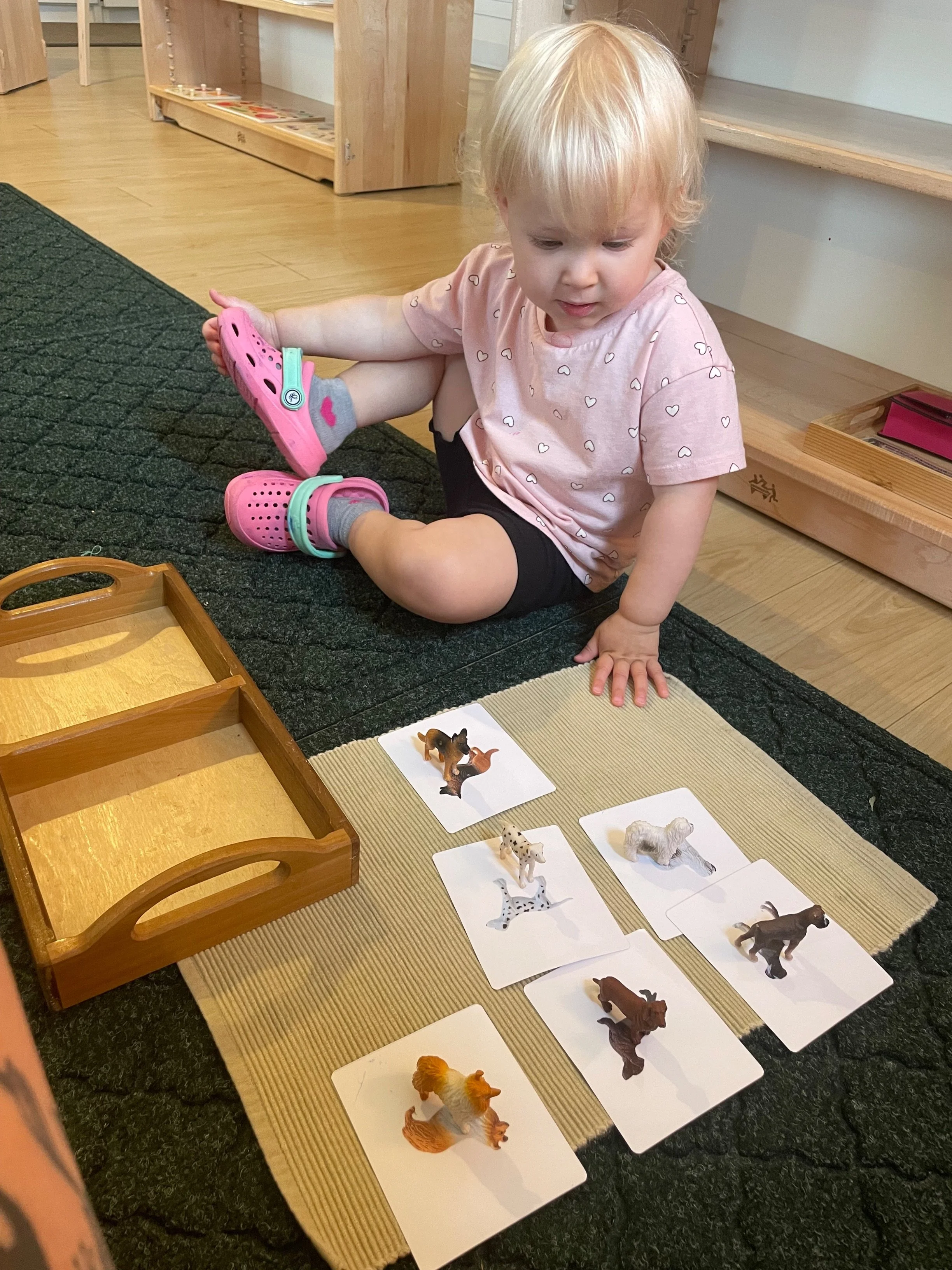
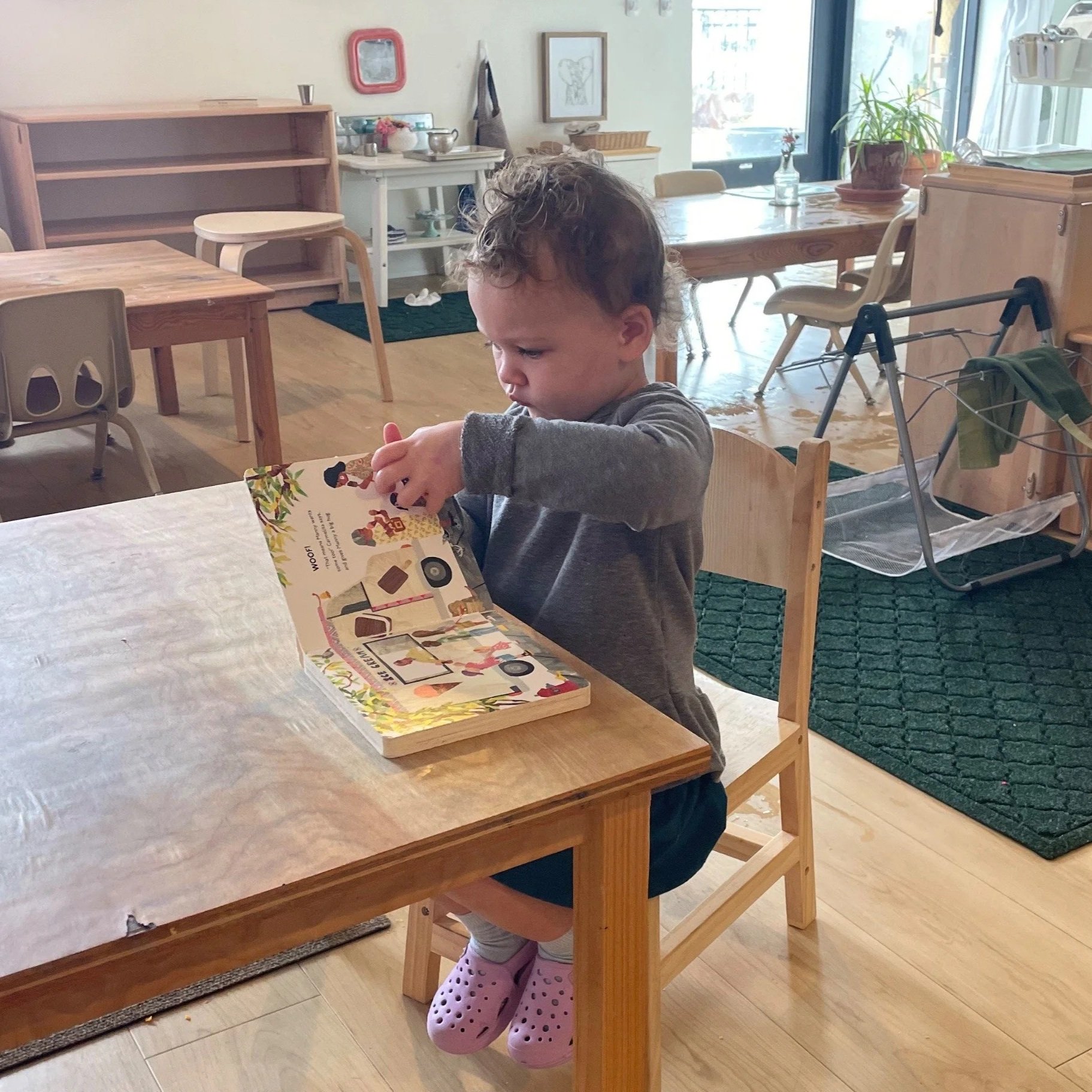
Children first develop language through listening and speaking. They hear rich vocabulary, sing songs, participate in conversations, tell stories, ask questions, and learn that spoken words carry meaning.
Then they begin discovering something fascinating: words are made up of individual sounds!
Through Sound Games and other language activities, children develop awareness and begin to hear the individual sounds within words and notice that words can be taken apart and put back together.
Next, children connect those sounds to written symbols.
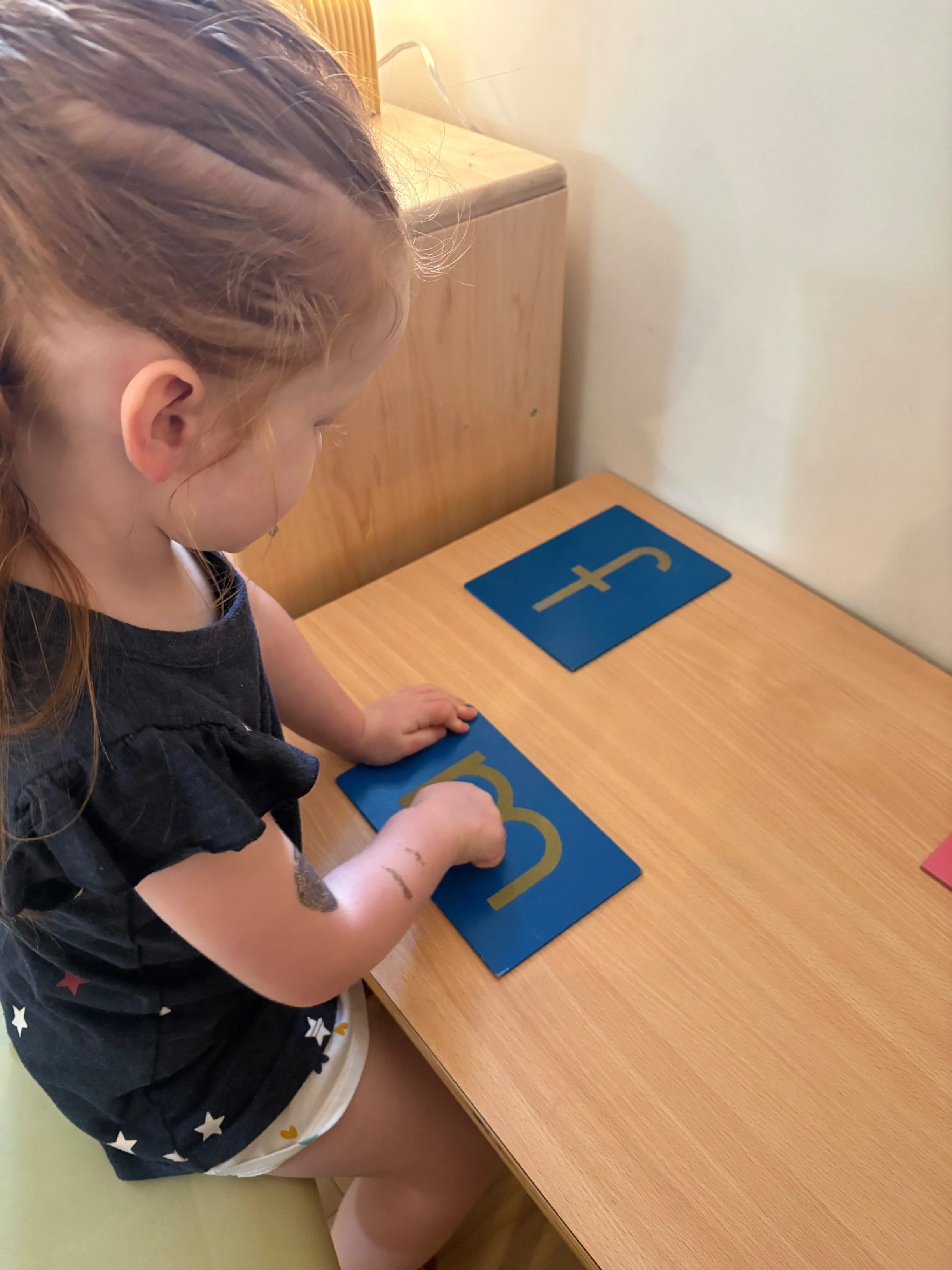
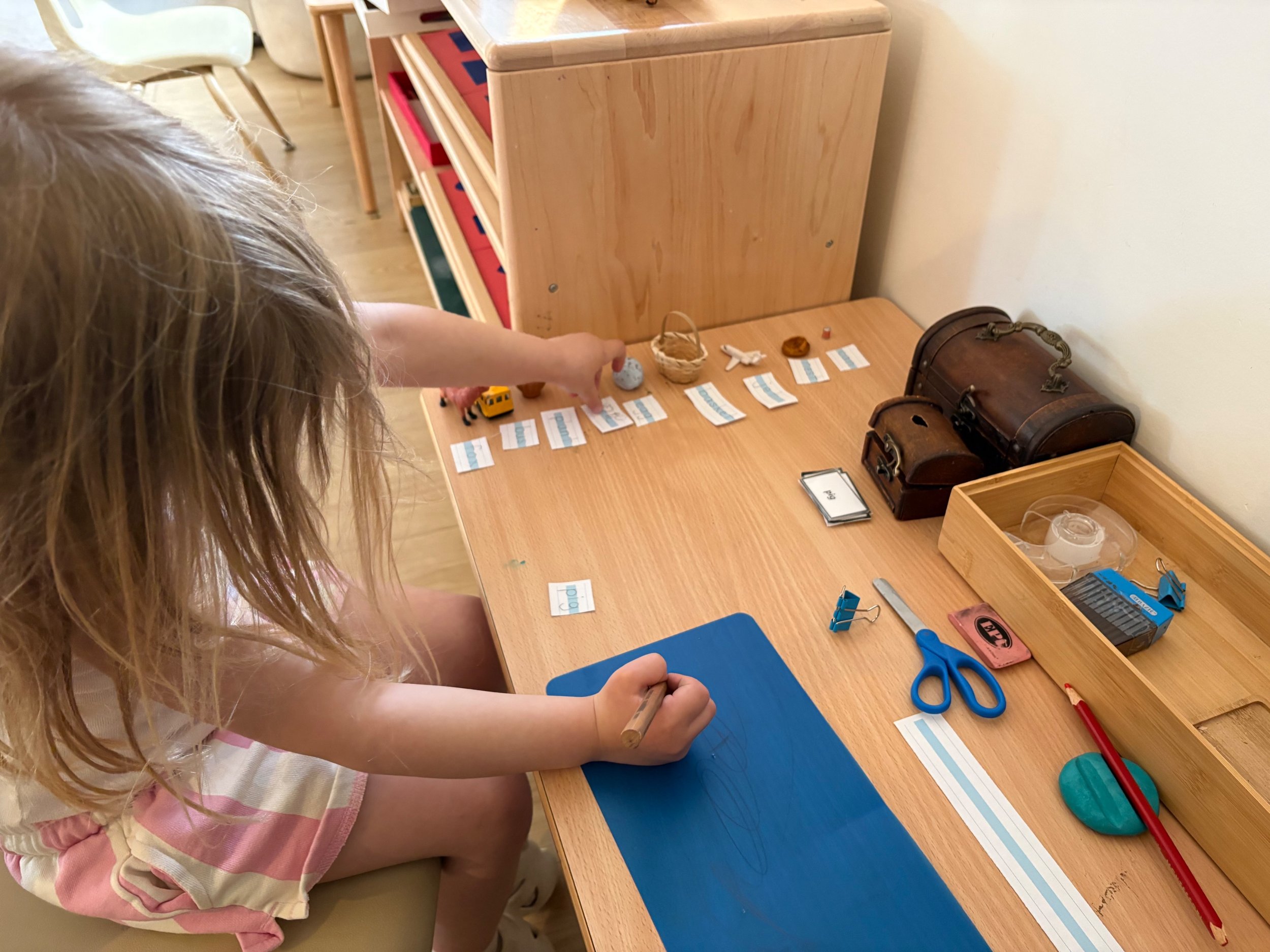
The Sandpaper Letters help children connect a sound with the symbol that represents it. They see the letter, hear its sound, trace its shape, and begin building a mental connection between the spoken and written forms of language.
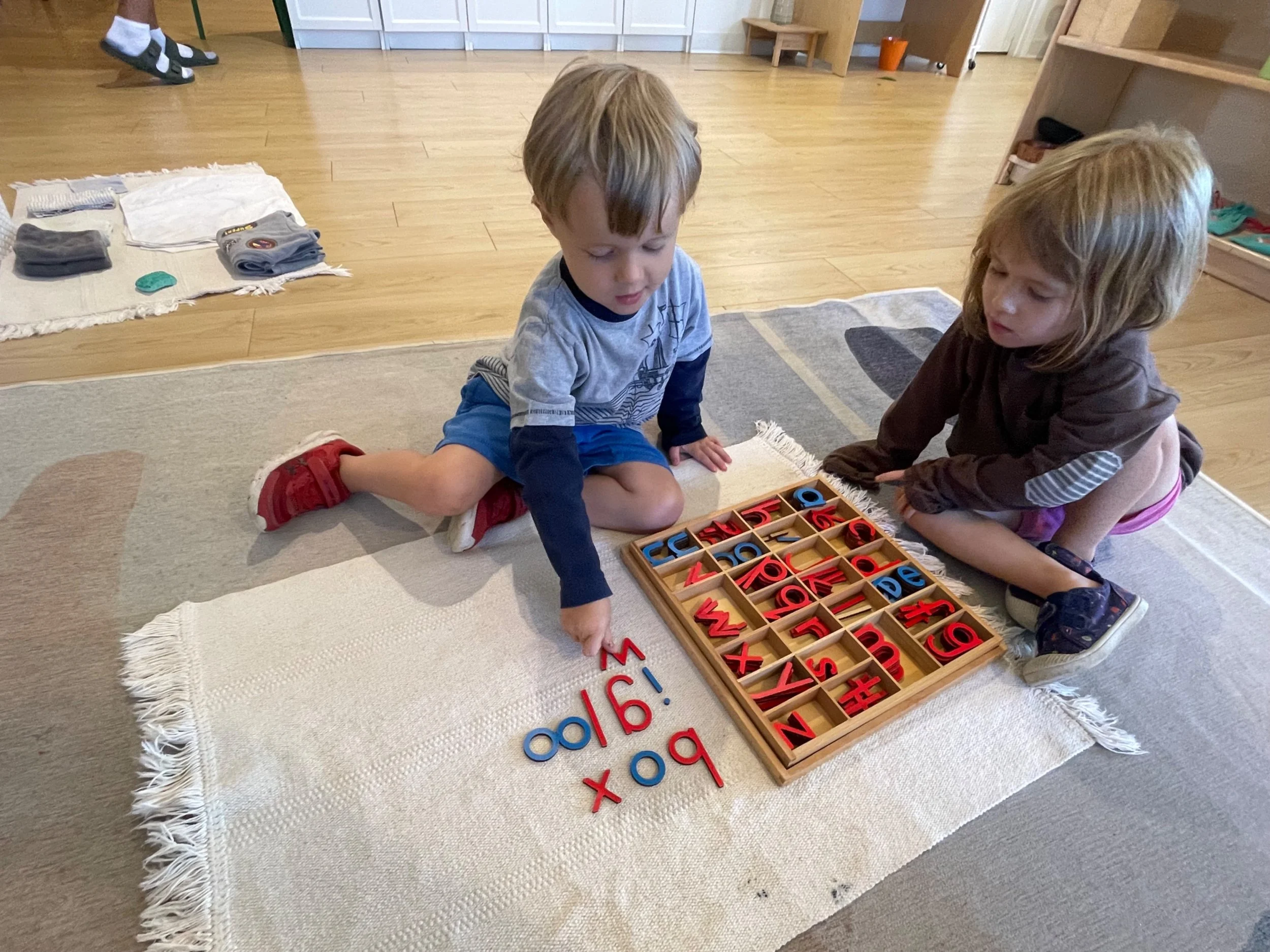
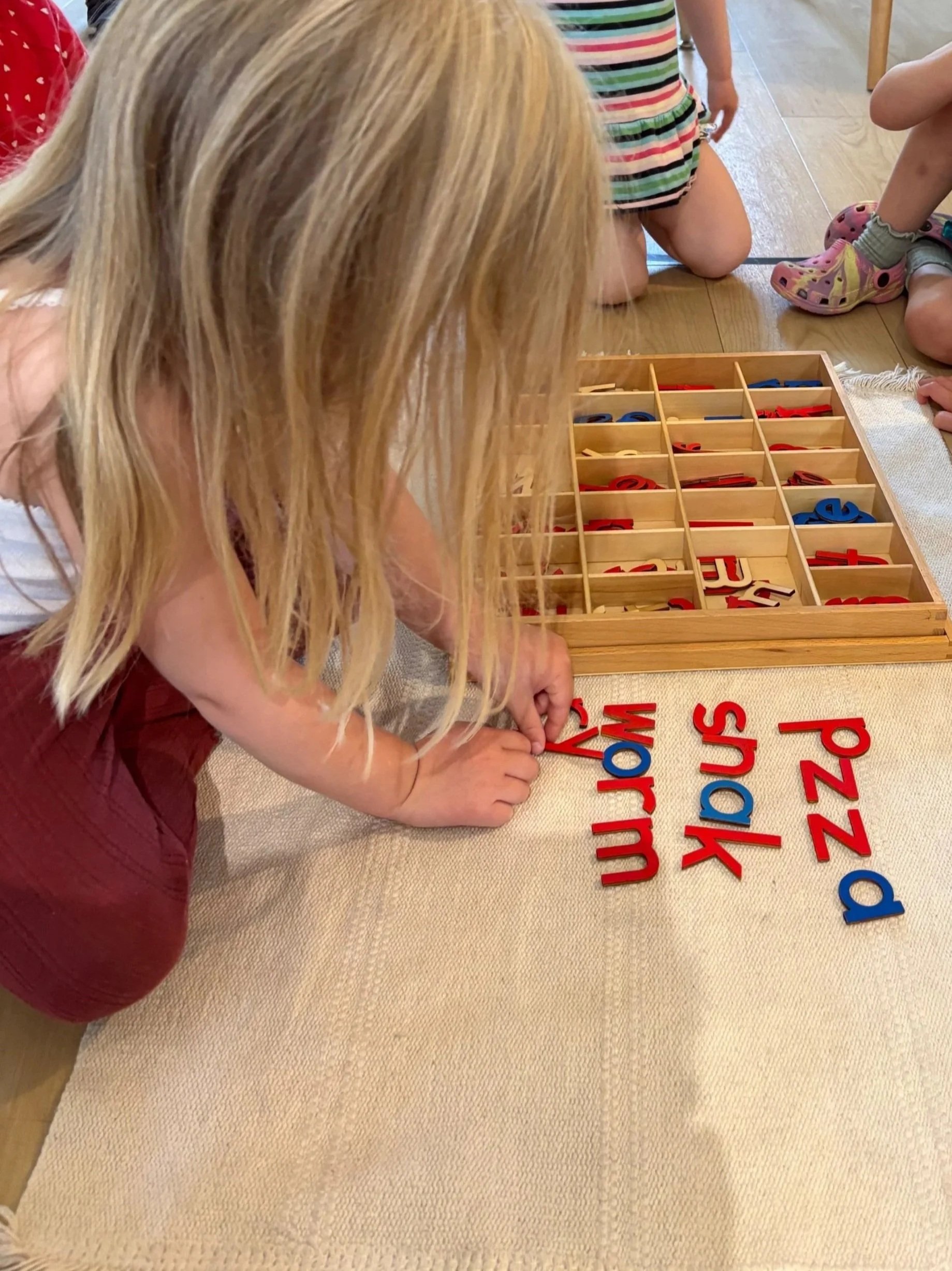
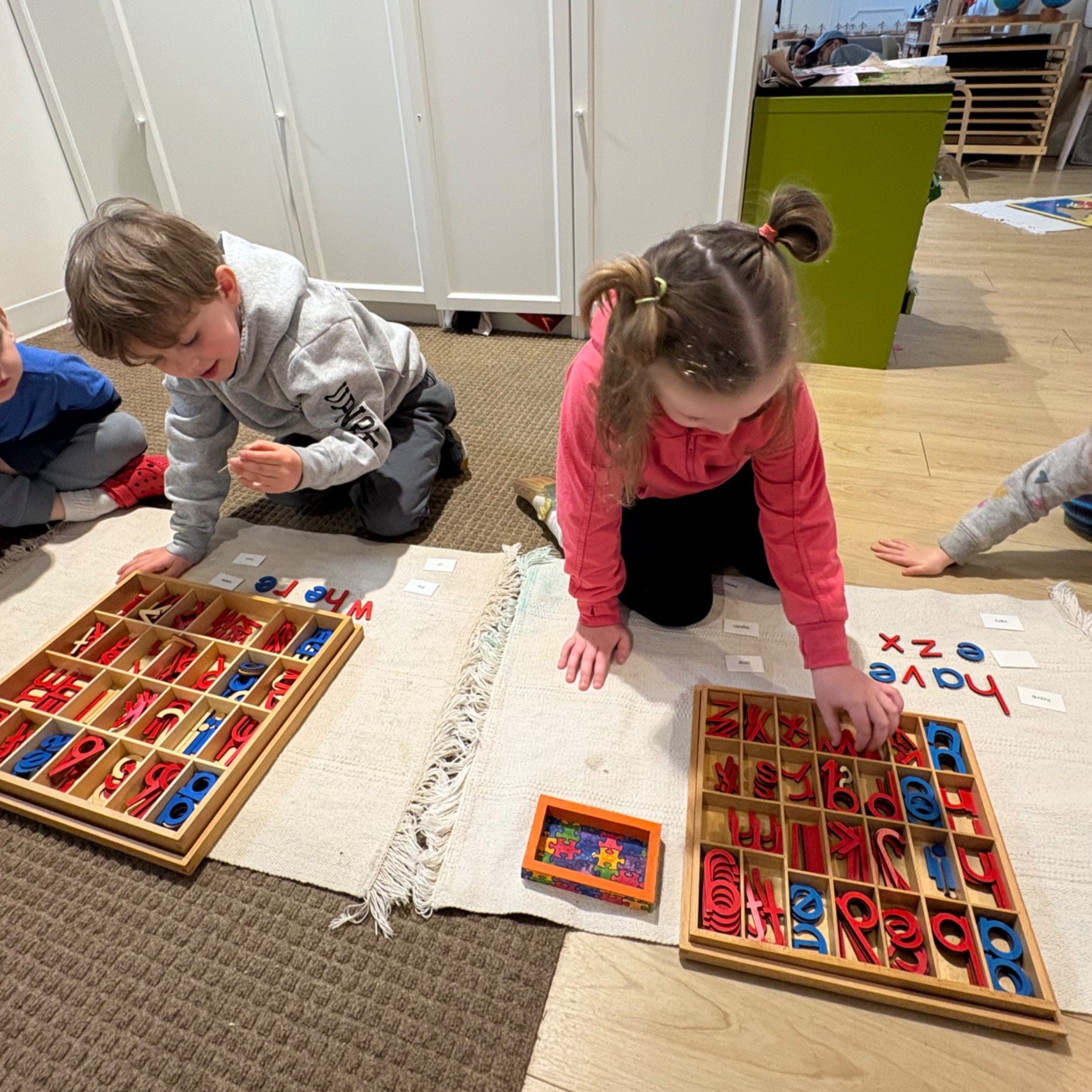
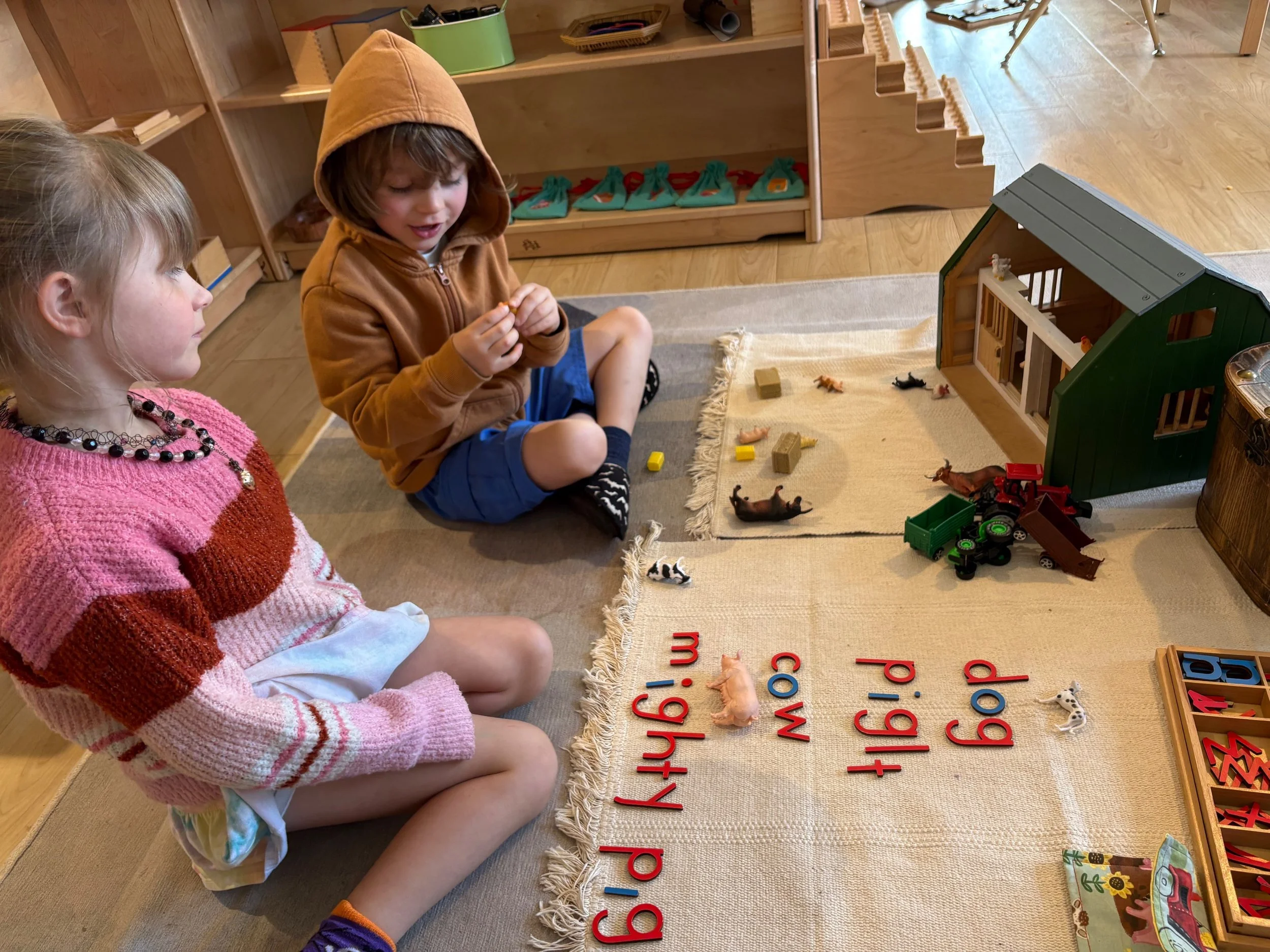
Then comes the Movable Alphabet, which gives children the opportunity to use those symbols to express their own thoughts.
Modern research has a name for this important process: encoding.
When a child thinks of the word sun, identifies /s/ /u/ /n/, and chooses the letters that represent those sounds, the child is encoding. They are moving from sounds to symbols.
Eventually, children turn that process around.
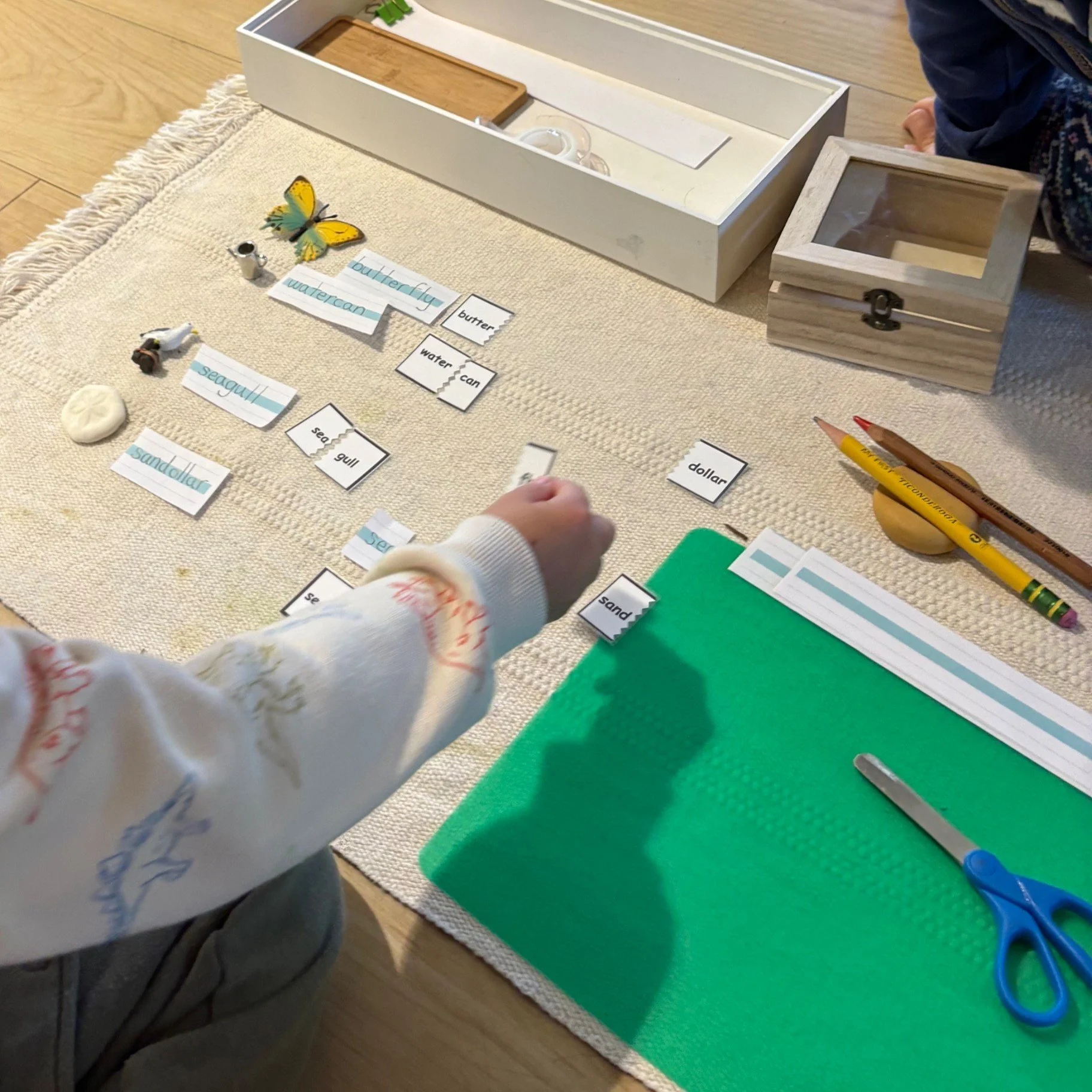
They see the symbols, work out the individual sounds, blend them together, and discover the meaning of the word.
That is decoding.
Encoding and decoding are essential building blocks of fluid reading.
A Conversation That Isn't So New
The terminology may be new to many, but the underlying work is not new to Montessori educators.
For generations, Montessori environments have given children opportunities to:
listen carefully to language
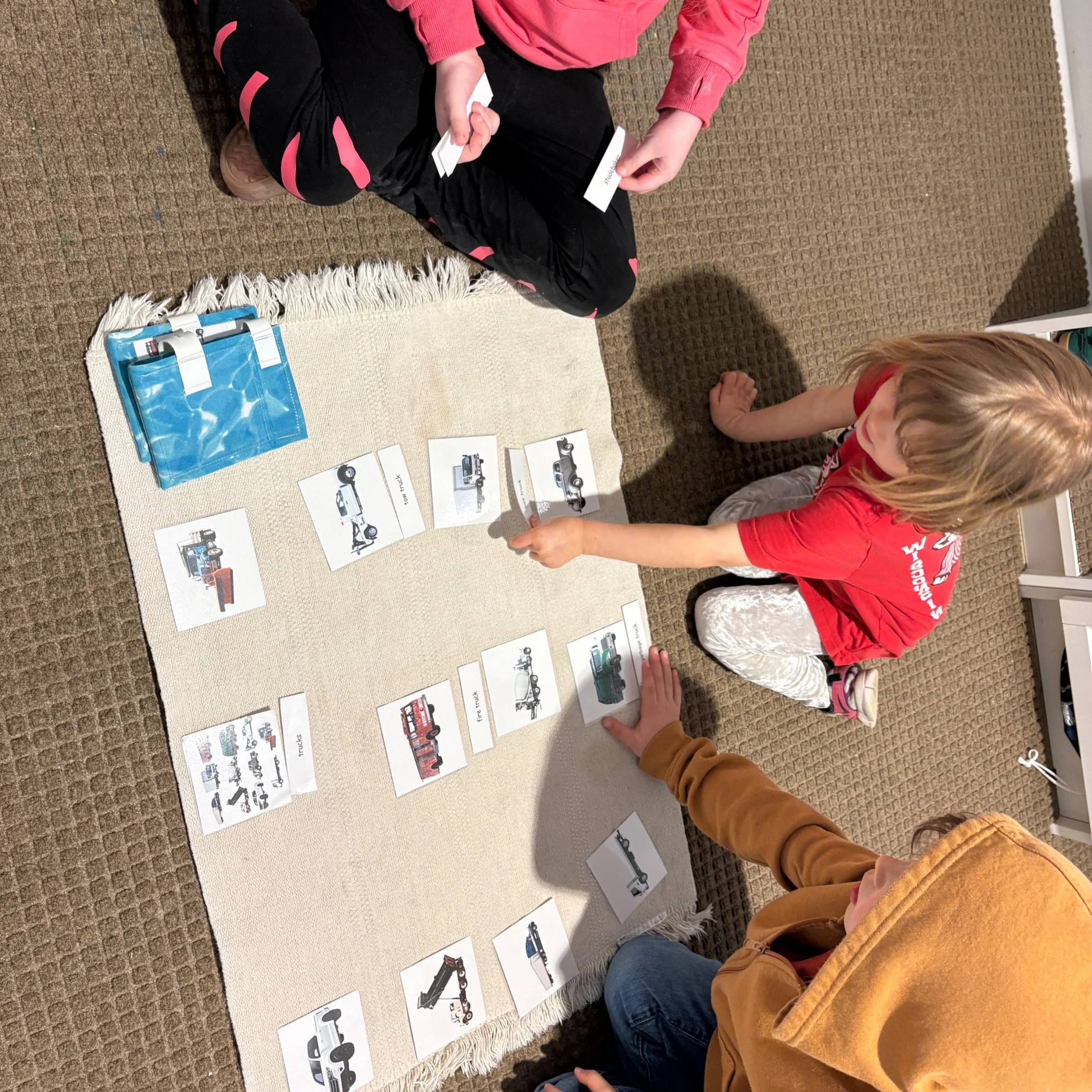
develop vocabulary and comprehension
develop awareness of sounds
connect sounds with symbols
spell and encode words
decode written words
read increasingly complex language
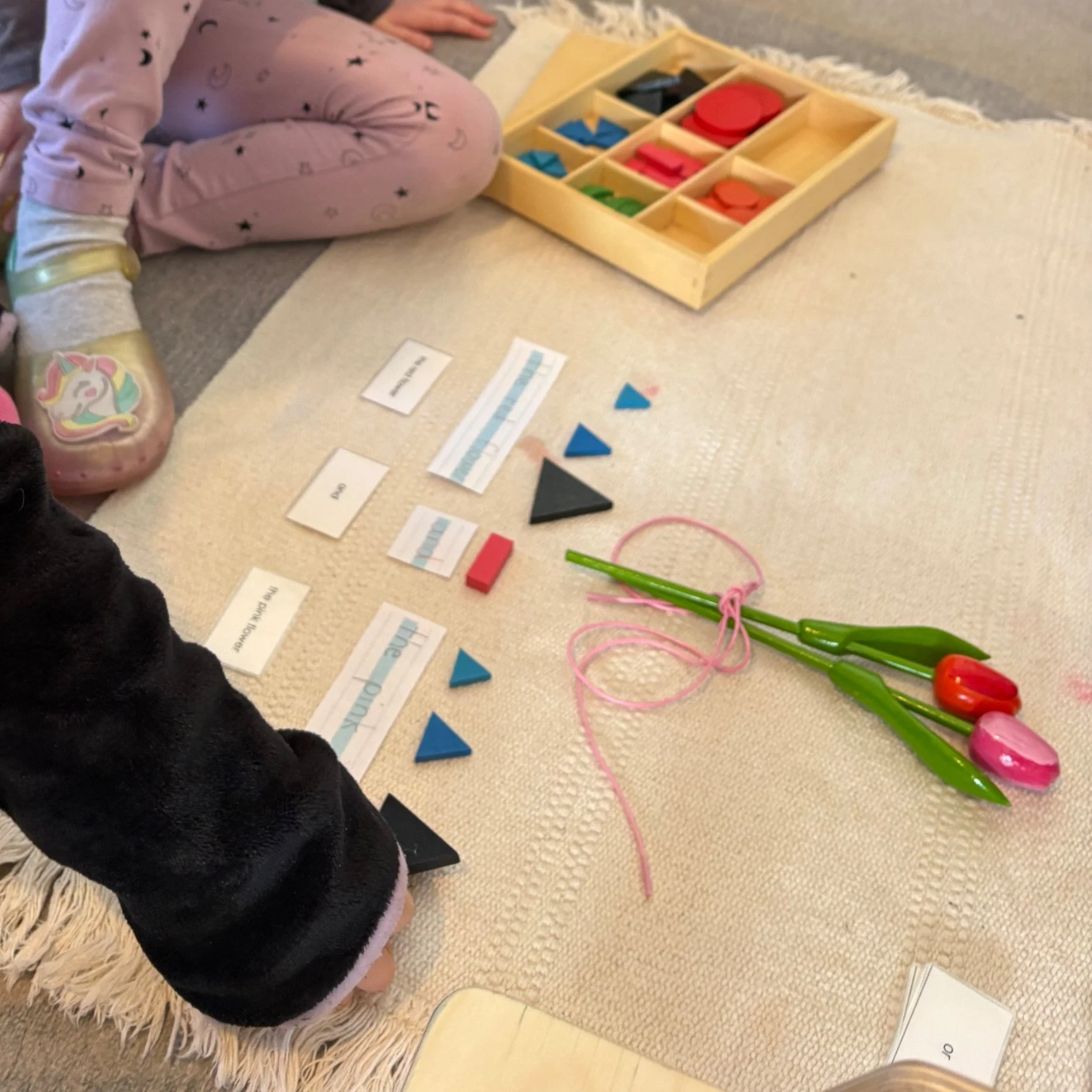
explore the function of words
analyze each word's purpose and place in a sentence
use reading to discover information and ideas
The Montessori approach does this gradually and intentionally, allowing children to build one piece at a time, becoming a confident reader who can use written language to communicate, explore, and understand the world.
That is why the current conversation around the Science of Reading is so exciting. The research may give a new language for describing the process, but Montessori educators have been observing that process in children for more than 100 years!
And at Clover, we get to watch it unfold every day. Schedule your tour today to see learning in action!