
Toilet Learning at Clover
Toilet learning is a significant step in a young child’s growing independence. At Clover Montessori School, we approach it as a natural part of development—not as something to be rushed or as a source of pressure.
Families sometimes wonder what toilet learning looks like once their child is at school, particularly because the Montessori approach is often different from what many may encounter in other early childhood settings and at home.
At Clover, children in the Toddler Community wear underwear throughout the school day from the time they begin at 16 months. There are no pull-ups or diapers, which are designed to prevent children from feeling moisture and prohibit the child’s awareness of when they are urinating.
This is intentional. Toilet learning develops through body awareness—recognizing the sensations that accompany elimination and gradually connecting those sensations with an action the child can take. Underwear allows children to experience that information directly.
Toilet Learning Is a Process, Not a Deadline
Toilet learning is a developmental process that unfolds over time and through experience.
A young child is learning to recognize bodily sensations, connect them with elimination, communicate what they need, get to the bathroom, manage their clothing, use the toilet, wipe, flush, wash their hands, and return to their work.
That is a lot of new information, steps and coordination!
We expect this learning to take time. Accidents, which we refer to as misses, are a normal and expected part of the process. They do not mean that a child is falling behind, or that something has gone wrong.
Every child’s path is their own. Some children catch on quickly, and others need much more time and repetition. Our role is to provide the environment, routines, and support that allow each child to gain these skills and gradually become more independent.
Routines Built Into the Day
Toilet learning is woven into the daily schedule of the Toddler Community rather than treated as a special event or an opportunity for negotiation.
There are set times when the children visit the bathroom (a few at a time, of course) including upon arrival at school, after the two-hour work cycle and before going outside, before lunch, after lunch and before nap, and after nap.
Children also have opportunities to use the bathroom when they recognize that they need to go. Adults learn each child's individual body cues and help children learn to recognize those sensations for themselves.
The goal is not for an adult to constantly say, “It’s time to sit on the toilet.” Instead, we support children in becoming aware of their own bodies and are active participants in the process.
So Much More Than Using the Toilet
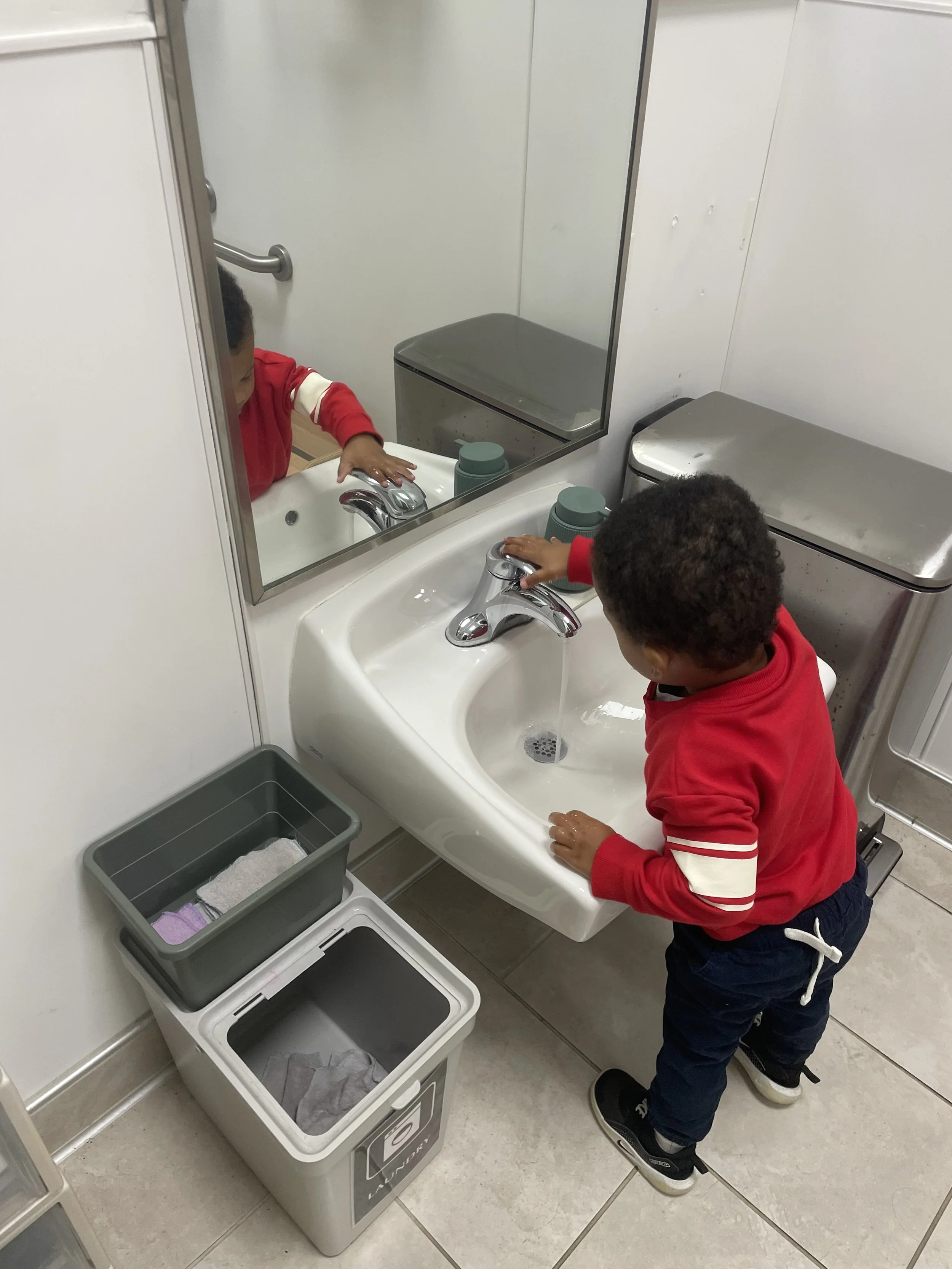
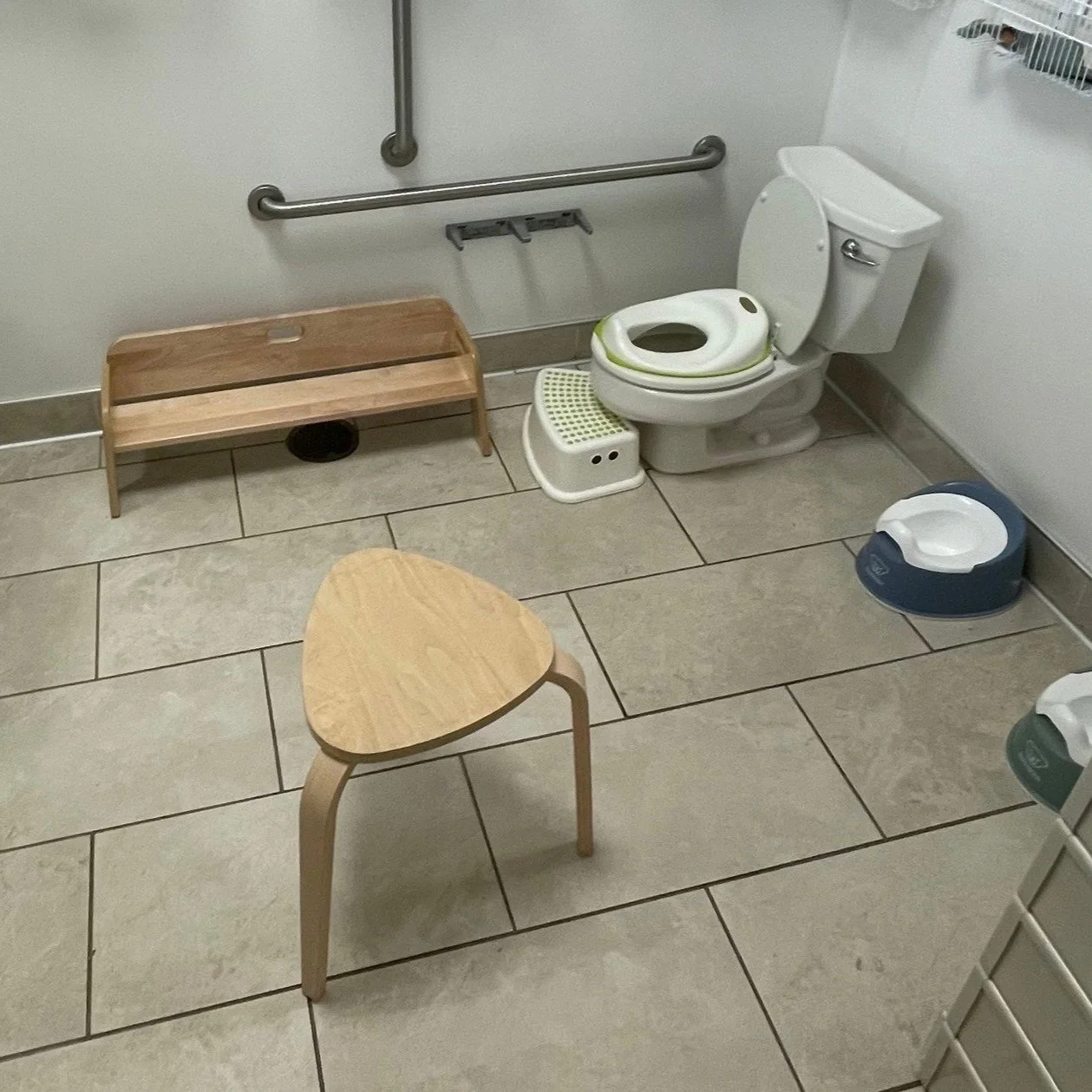
Toilet learning is so much more than sitting on the toilet! A child is simultaneously learning how to care for their own body and clothing, requiring significant strength, coordination, and skill.
We support children in learning to:
Recognize the feeling of needing to use the bathroom
Walk to and enter the bathroom independently
Pull underwear and clothing down and back up
Sit on the toilet
Wipe with appropriate support
Flush
Wash and dry their hands
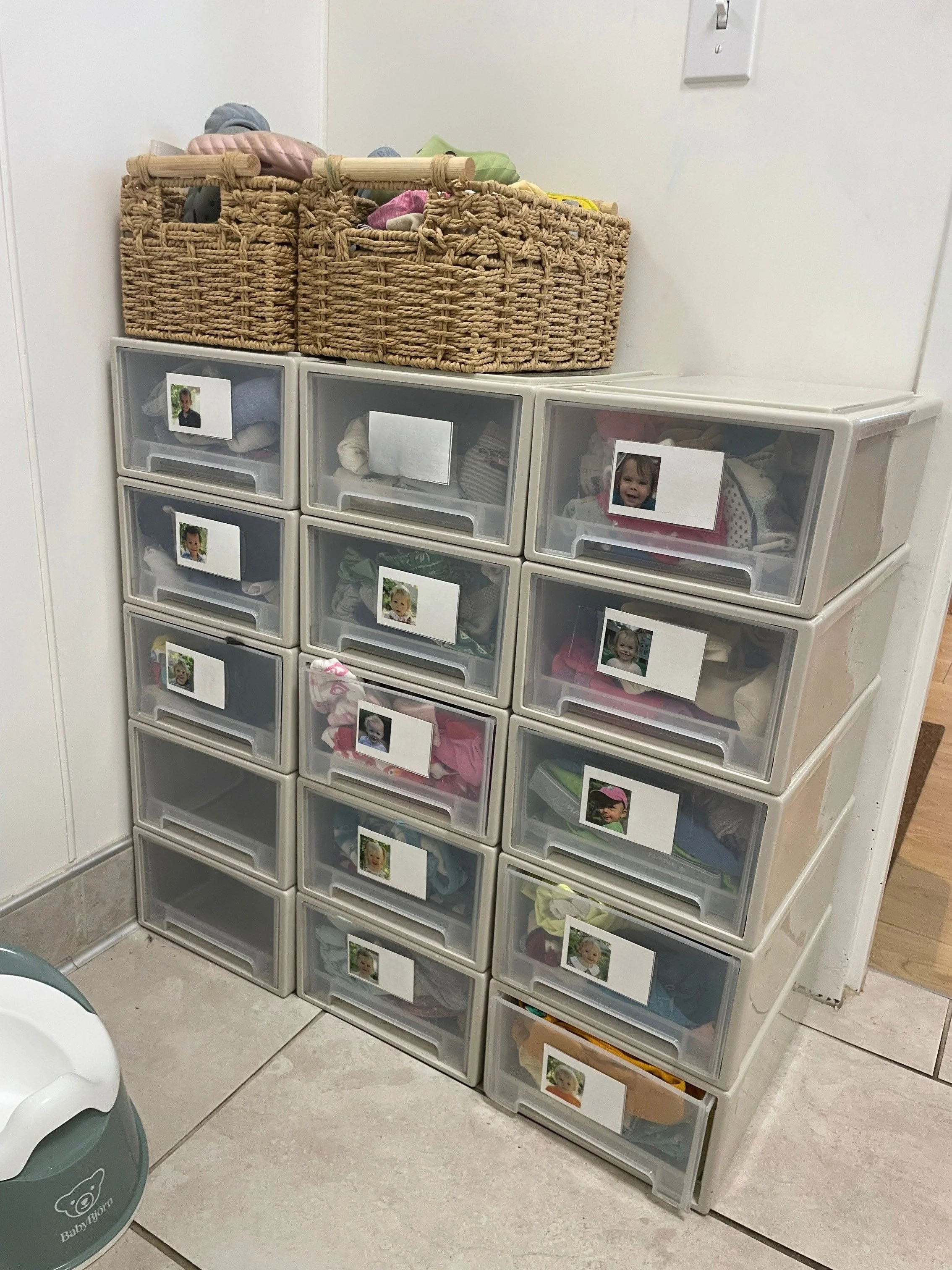
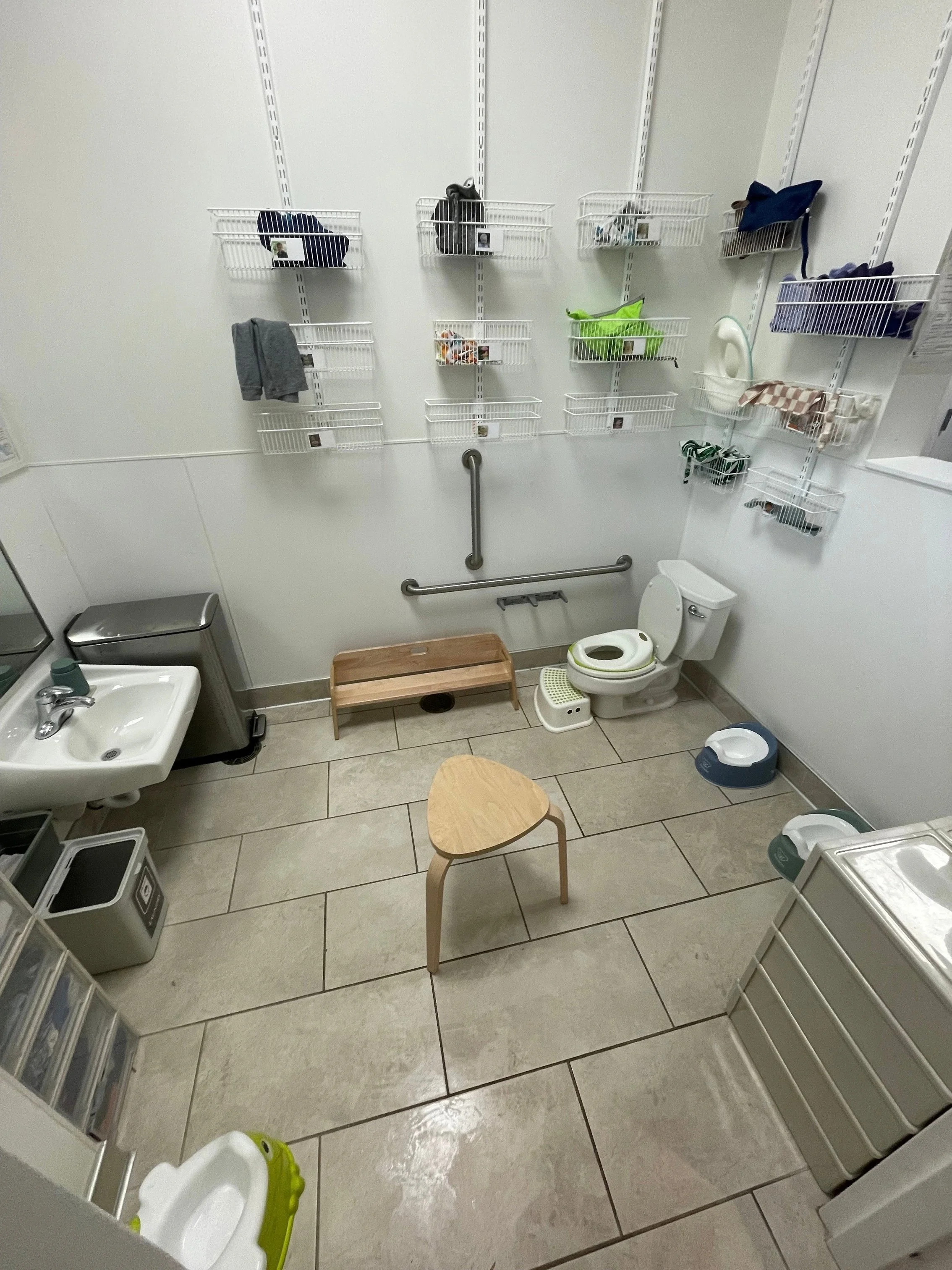
Change into dry clothing after a miss
Put wet clothing into the appropriate place
Ask for help when they need it
An adult will provide more assistance at first and gradually step back as the child becomes capable of doing more independently.
What Happens When There Is a Miss?
Misses are natural and expected!
When a child has a miss, we respond matter-of-factly and help them take care of what happened. There is no shame, disappointment, or embarrassment attached to it.
Our language is simple, factual, and neutral:
“Your underwear is wet. Let’s go to the bathroom and change.”
Or:
“Let’s sit on the toilet and get some dry clothes.”
Elimination is a biological fact. Everyone eats. Everyone sleeps. Everyone eliminates. Using the toilet is part of caring for our bodies, and children have the innate, inner motivation to reach this milestone when supported according to their natural development.
We don't use stickers, treats, prizes, or other rewards for using the toilet. We also don't shame, scold, tease, or express disappointment when a child has a miss.
Instead, we offer information, assistance, and opportunities for practice.
When a child successfully uses the toilet, we can acknowledge what happened without turning it into a performance:
“You noticed that your body needed to go, and you made it to the toilet.”
And when a child excitedly exclaims, “I did it!”, we join them in their happiness:
“You used the toilet! How does that feel?”
The focus remains on the child's growing awareness and on how they are experiencing their accomplishment, not how it was perceived by the adult.
Clothing Matters
Clothing can make a significant difference in a child's ability to dress and undress independently. We encourage families to send children in clothing that is easy for them to manage themselves. Elastic waistbands and simple, comfortable clothing allow children to practice pulling their clothing down and back up without unnecessary obstacles.
This is another reason underwear is important in our Toddler Community. Underwear provides children with immediate information about what is happening with their bodies and gives them the opportunity to respond.
Pull-ups/diapers may make it easier for adults to manage misses, but they also reduce the child's opportunity to notice the difference between being dry and wet and to participate in changing themselves.
A child cannot learn to recognize a bodily sensation that a product is specifically designed to remove.
Our learning environment is designed around the expectation that children are active participants in their own lives and hygiene.
Home and School: A Partnership
Because children wear underwear from the beginning of their time in the Toddler Community, families sometimes worry that we expect a 16-month-old to already be independently using the toilet before they start school.
We don't!
A child beginning at 16 months may have many misses and need substantial adult assistance. The expectation is not that a child must arrive “ready” or “trained.” The Toddler Community environment gives them the opportunity to learn.
Over time, children move through many stages: noticing that they are wet, becoming interested in the toilet, sitting on the toilet, occasionally eliminating in the toilet, recognizing the need before a miss, managing their clothing, etc. There is no need to rush from one stage to the next.
Toilet learning is most successful when children experience consistency and respect across home and school. Your child’s Guide will communicate with families about what they are noticing at school, including emerging awareness, successes, misses, and areas where a child may need additional support. Families can share what they are seeing at home as well.
There may be periods when a child is very consistent at school and has more frequent misses at home, or the reverse. Different environments, routines, and levels of distraction can all affect a young child's toileting journey.
What matters most is that the adults supporting the child maintain a shared sense of confidence and patience.
The Journey Toward Independence
Toilet learning is not a test that children pass or fail. It is one of many developmental journeys toward independence.
At Clover, we give children the time, repetition, practical skills, and respectful support they need to become increasingly capable of caring for themselves.
The journey is not linear. Through everyday practice and with the support of the adults around them, children discover something important:
They are capable.
